
The Omega Speedmaster isn’t just a watch. It’s the timepiece that went to the moon, survived the vacuum of space, and became the only piece of equipment NASA certified for extravehicular activity.
This legendary status has made the Speedmaster one of the most coveted chronographs in watchmaking history. It has also made it one of the most counterfeited.
Walk into any vintage watch forum, scroll through online marketplaces, or browse estate sales, and you’ll encounter what seems like an endless supply of Speedmasters. The problem? A disturbing number of them are franken-watches, refurbished pieces with non-original parts, or outright fakes sophisticated enough to fool collectors who’ve been in the game for years.
The Speedmaster Paradox: Too Popular for Its Own Good
Here’s the uncomfortable truth: the Omega Speedmaster’s accessibility and iconic status have created a perfect storm for counterfeiters. Unlike ultra-exclusive brands that produce limited quantities, Omega manufactured Speedmasters in significant numbers across multiple decades. This volume, combined with countless variations and references, creates confusion that fraudsters exploit mercilessly.
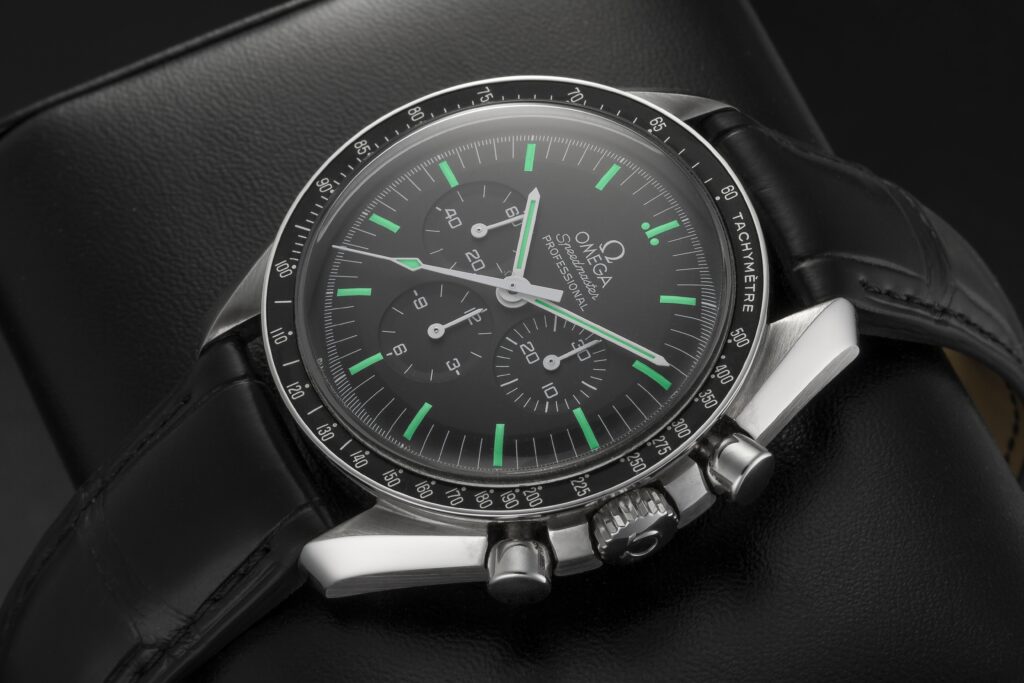
The replica market has evolved dramatically. We’re no longer talking about obvious fakes with misspelled dials sold from blankets on street corners. Today’s high-grade replicas use quality materials, proper case dimensions, and movements sophisticated enough to fool casual inspection. Some even use genuine Omega parts salvaged from damaged watches, creating hybrid pieces that blur the line between authentic and counterfeit.
Why Authentication Isn’t Optional Anymore
The financial stakes are substantial. A genuine Omega Speedmaster Professional can command anywhere from $5,000 to over $30,000 depending on the reference, condition, and provenance. Rare variants like the “Ed White” reference 105.003 or pre-moon landing models fetch astronomical prices at auction. One misidentified dial or replaced movement can mean the difference between a $15,000 collector’s piece and a $3,000 parts watch.
Beyond money, there’s the emotional investment. Watch collectors form deep connections with their timepieces, especially one with the Speedmaster’s storied history. Discovering that your “moon watch” is actually a clever fake or heavily modified piece can be devastating.
Decoding the Speedmaster: What Makes It Authentic
The Devil Lives in the Dial Details
The Speedmaster dial is where most fakes reveal themselves, but you need to know what you’re looking for. Authentic dials feature printing so precise that it appears three-dimensional under magnification. The “Omega” logo should have perfectly symmetrical curves with consistent line weight. The “Speedmaster” script curves gracefully across the dial with specific spacing that counterfeiters consistently get wrong.
Pay obsessive attention to the sub-dial printing. On genuine Speedmasters, the numbers on the 3, 6, and 9 o’clock registers appear crisp with consistent depth. Replica dials often show numbers that look stamped rather than printed, with ink that sits on top of the dial surface instead of being integrated into it.
The lume plots tell their own story. Original tritium lume from vintage Speedmasters develops a distinctive cream or yellowish patina over decades. Fake “tropical” dials trying to mimic this aging often show uneven discoloration or lume that looks painted on rather than applied in careful dots. Modern Speedmasters use Super-LumiNova, which should glow bright green-blue under UV light with no patina whatsoever.
Case Construction: The Architecture of Authenticity
Omega’s case construction for the Speedmaster follows exacting standards that replicas struggle to replicate convincingly. The lugs should have sharp, defined edges, not the soft, rounded profiles common on fakes. Run your finger along the case sides and you’ll feel the difference between Omega’s precise finishing and the slightly rough texture of inferior copies.
The case back is particularly revealing. Authentic Speedmaster Professionals feature the famous seahorse medallion with intricate detail that remains sharp even under decades of wear. Count the ridges on the seahorse’s tail, examine the definition in the waves, and look at the text surrounding the emblem. Replica case backs often show mushy details where the design loses definition.
Here’s something most people miss: the case back edge thickness. Genuine Omega case backs have a specific dimension and weight distribution. Pick up enough authentic Speedmasters and you develop a tactile sense for what’s right. Fakes often feel either too light or have case backs that sit incorrectly in the case, creating a subtle gap or misalignment.
The Movement: Where Truth Reveals Itself
Open the case back and you’re looking at the soul of the watch. The Speedmaster Professional uses the legendary Lemania-based caliber 1861 (or 321 in vintage and recent limited editions). These movements are masterpieces of mechanical engineering, and that’s exactly where high-quality fakes still fall short.
Authentic caliber 1861 movements feature specific decorative patterns and finishing that identify them instantly to trained eyes. The rhodium plating should have a consistent, brilliant finish. Look for Omega’s branding etched clearly on the movement bridges. The shock protection jewels (usually red) should be properly seated in gold chatons.
Watch the chronograph mechanism in action. When you press the pushers, genuine Speedmaster movements respond with precise, crisp action. There should be no wobble in the chronograph hands, no grinding resistance, and the reset should snap back to zero with satisfying authority. Replica movements often feel mushy or imprecise when operating the chronograph functions.
Hands That Tell More Than Time
The hands on a Speedmaster deserve their own examination. Authentic hands have beveled edges that catch light beautifully, creating a subtle three-dimensional effect. The lume application inside the hands should appear perfectly uniform, without bubbles, gaps, or overflow onto the hand surfaces.
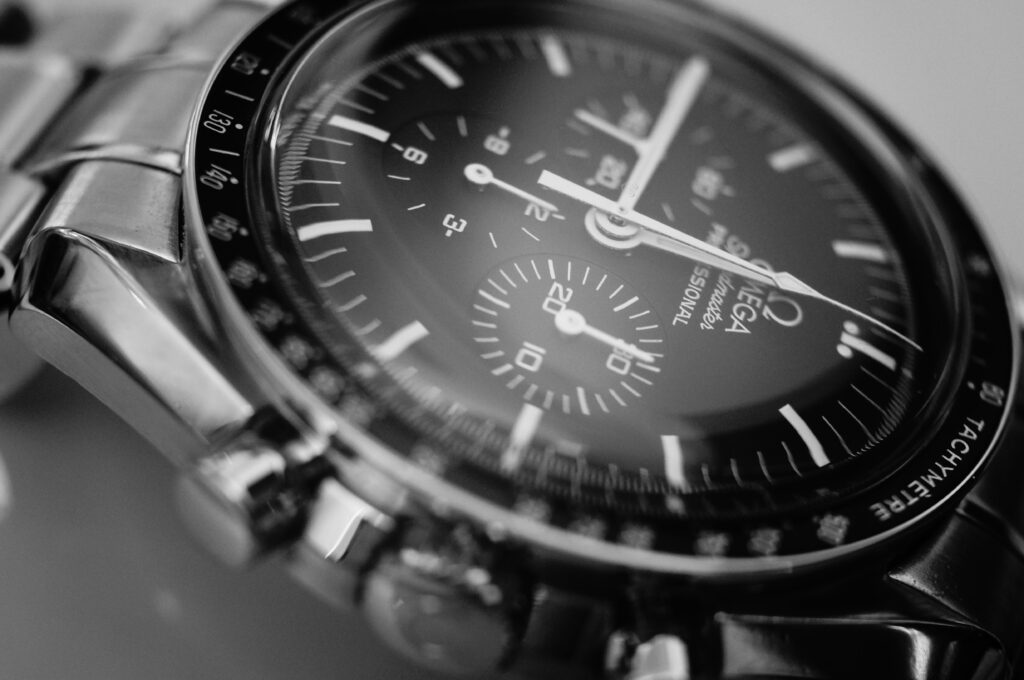
Vintage Speedmaster hands should show age-appropriate patina matching the dial’s lume plots. Mismatched aging between hands and dial is a red flag suggesting either replaced components or artificial aging. The central chronograph hand should have Omega’s distinctive orange or white paint applied evenly without bleed marks.
The Bracelet Connection
While many Speedmasters come on straps, those featuring the reference 1998 bracelet offer additional authentication opportunities. Genuine Omega bracelets have solid end links with precise tolerances, half-moon shaped links with polished centers and brushed edges, and clasp mechanisms that close with a secure, satisfying click.
Check the clasp for Omega branding that’s deeply stamped, not superficially etched. The bracelet should feel substantial without excessive weight. Replica bracelets often rattle slightly due to looser tolerances in the link construction, while authentic Omega bracelets maintain tighter mechanical precision.
Reference-Specific Red Flags
Different Speedmaster references have unique characteristics that authenticate them. The “Professional” dial text and lack of date function distinguish true moon watches from reduced or automatic variants. Early references like the 105.012 (the actual moon landing watch) feature straight writing and specific lug profiles. Later references transitioned to curved writing and modified cases.
Understanding these reference-specific details is crucial. A watch claiming to be a rare 145.012 but featuring wrong pushers, incorrect dial spacing, or mismatched case dimensions is either fake or frankenstein-ed from multiple donor watches. Neither scenario represents an authentic collectible timepiece.
The Extract Obsession: Why Papers Matter
Omega maintains archives dating back decades, allowing collectors to obtain “Extracts from the Archives” that document a watch’s original specifications. This service costs money but provides invaluable authentication for vintage pieces.
An Extract confirms the original configuration: dial type, hands, case reference, and production date. It won’t tell you if parts were replaced after leaving the factory, but it establishes a baseline for what should be there. Many sophisticated fakes fall apart when compared against Extract documentation showing the watch doesn’t match factory records.
Common Scams and How They Work
The Service Dial Deception: Sellers claim the dial was replaced during factory service, explaining why it doesn’t match the watch’s age. While Omega did replace dials during service, this explanation is overused to justify mismatched components. Request service documentation proving the replacement.
The Tropical Fantasy: Naturally aged “tropical” dials command premiums, so counterfeiters artificially age dials to create them. Genuine tropical aging shows consistent, natural color change. Artificial aging often appears uneven with suspiciously perfect lume patina.
The Parts Watch Puzzle: Clever fraudsters build watches from genuine Omega parts salvaged from multiple damaged watches. The result looks authentic because it is authentic, just not as a cohesive, factory-original timepiece. These frankenwatches fool even experienced collectors.
The “Rare Variant” Trap: Sellers invent or exaggerate the rarity of particular configurations to justify inflated prices. Research references thoroughly through trusted resources before accepting claims about special editions or military variations.
Professional Authentication: When DIY Isn’t Enough
Certain authentication steps require professional expertise and equipment. Authorized Omega service centers can verify authenticity through movement examination and serial number database checks. Independent watchmakers with Omega specialization offer authentication services at lower costs than boutiques.
Advanced authentication techniques include x-ray analysis revealing internal case construction details invisible externally, spectroscopy identifying metal composition to detect fake precious metal cases, and microscopic examination showing tool marks and finishing techniques specific to Omega production.
The Vintage Speedmaster Minefield
Buying vintage Speedmasters requires even greater caution. Decades of ownership mean more opportunities for parts replacement, dial refinishing, or complete reconstruction. What looks like a beautiful 1960s Speedmaster might be a 1970s case with a refinished dial, aftermarket hands, and a service replacement crystal.
Originality commands premiums in vintage watches. A fully original Speedmaster 105.012 from 1966 might sell for $25,000, while the same reference with replaced dial and hands might fetch $8,000. Learn to identify original components versus service replacements versus aftermarket parts.
Building Your Authentication Toolkit
Serious Speedmaster collectors invest in proper tools. A 10x loupe reveals printing quality and finishing details invisible to the naked eye. UV lights expose lume authenticity and dial refinishing. A small scale weighs the watch, revealing suspiciously light replicas. Reference books and online databases provide specifications for every Speedmaster variant ever produced.
Join collector communities where experienced enthusiasts share knowledge. Forums like Omega Forums and watch-specific Reddit communities offer authentication assistance, though always verify advice through multiple sources.
Trust Your Instincts (But Verify Everything)
After examining dozens of Speedmasters, you develop intuition for authenticity. Something feels off about the dial printing. The case dimensions look slightly wrong. The movement doesn’t have that characteristic Speedmaster appearance. These gut feelings often prove correct, but never rely on intuition alone. Verify suspicious details through careful examination and expert consultation.
Protect Your Investment from Day One
Once you’ve acquired an authenticated Speedmaster, protect it properly. Store documentation separately from the watch for insurance purposes. Photograph every detail for future reference. Service only through Omega or trusted independent watchmakers who maintain originality. Consider insurance specifically covering collectible timepieces.
The Final Word: Authenticity in the Digital Age
The fight against counterfeit Speedmasters continues evolving. While fakes become more sophisticated, authentication technology advances even faster. Digital tools now assist collectors in making informed decisions with greater confidence than ever before.
Don’t gamble with your investment in horological history. Before purchasing any Omega Speedmaster, especially vintage or pre-owned pieces, use WatchVeritas.ai to authenticate the watch with cutting-edge artificial intelligence. Upload detailed photos and receive instant analysis comparing your watch against thousands of authenticated Speedmasters.
WatchVeritas.ai identifies inconsistencies, verifies dial authenticity, and confirms movement accuracy with precision that rivals expert watchmakers. Whether you’re buying your first Speedmaster or your twentieth, WatchVeritas.ai provides the confidence you need to invest wisely. Download the app today and ensure your moon watch is the genuine article. Because when you’re buying a piece of space exploration history, authenticity isn’t just important. It’s everything.

